
Healthcare Literacy Optimization Model (HLOM™)
A Pre-Decisional Compliance Architecture for Federally Regulated Insurance Environments
The Administrative Burden & Behavioral Risk Interface
Modern regulatory systems often assume rational, fully informed actors. Behavioral economics research demonstrates otherwise.
Consumers navigating complex insurance systems face:
- Information asymmetry
- Cognitive overload
- Decision fatigue
- Regulatory terminology barriers
- Risk misperception
- Projection uncertainty (especially among variable-income earners)
The concept of “administrative burden” — widely discussed in public policy research — describes the cognitive, psychological, and procedural costs imposed on individuals interacting with government-regulated systems.
In healthcare insurance environments, these burdens manifest at the intake stage:
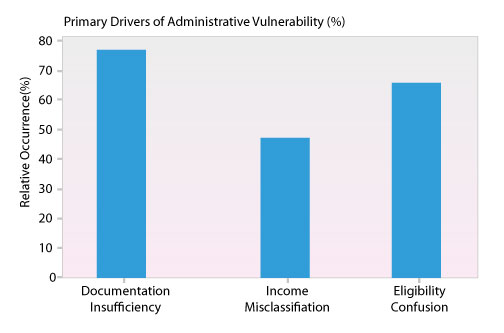
- Misclassification of projected income
- Confusion regarding subsidy reconciliation
- Incomplete documentation preparation
- Misunderstanding of reporting obligations
The pre-decisional stage — before enrollment submission — is where most of these vulnerabilities originate. Yet most advisory environments focus primarily on plan selection and transactional completion.
This creates a structural gap.